Driving While Not Confused
A Report From the Frontlines of Bilingual Sign Trauma

Before leaving Aotearoa, the familiar chorus of complaints about bilingualism, te Tiriti, and te reo Māori was still ringing out—remarkably persistent, despite it being the 21st century. These aren’t new debates, of course, but part of the ongoing, relentless, and frankly exhausting stream of political attacks on te reo Māori.
Of course, much of this all sparked off again with David Seymour’s crusade against the encroaching bilingual signs popping up around the country back in 2023. His argument centred on the idea — flimsy as it was — that bilingual road signs would ‘confuse’ international visitors.
Fast forward to me now, November 2025, driving around Wales — where bilingual signage is everywhere — and I can confirm that I remain blissfully unconfused.
Not lost.
Not startled.
Not mentally destabilised by the sudden sight of two languages on the same sign.
If anything, bilingual signage has been interesting, welcoming, even fun — especially as I mangle Welsh pronunciations with the enthusiasm of a tourist who means well.
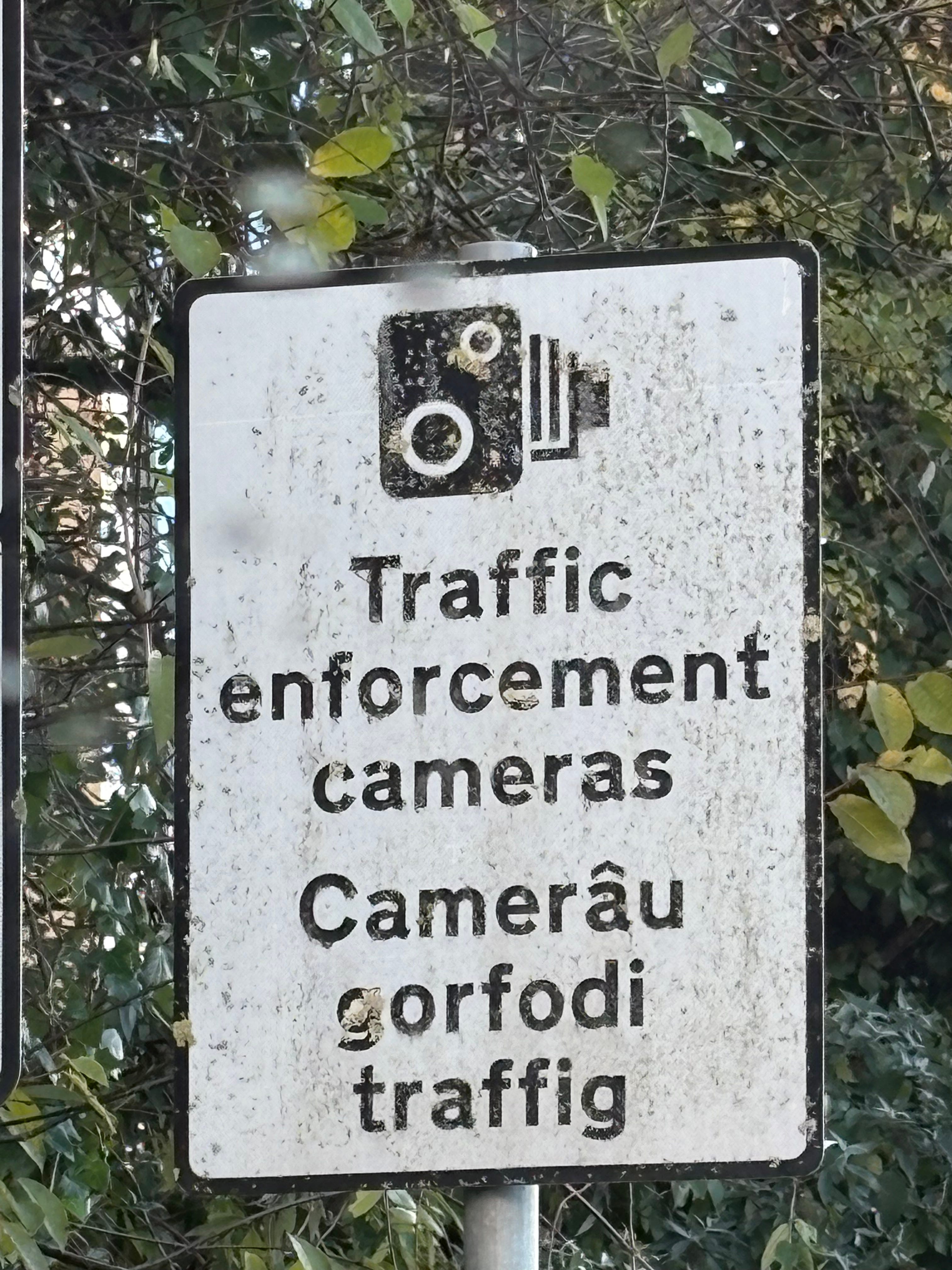
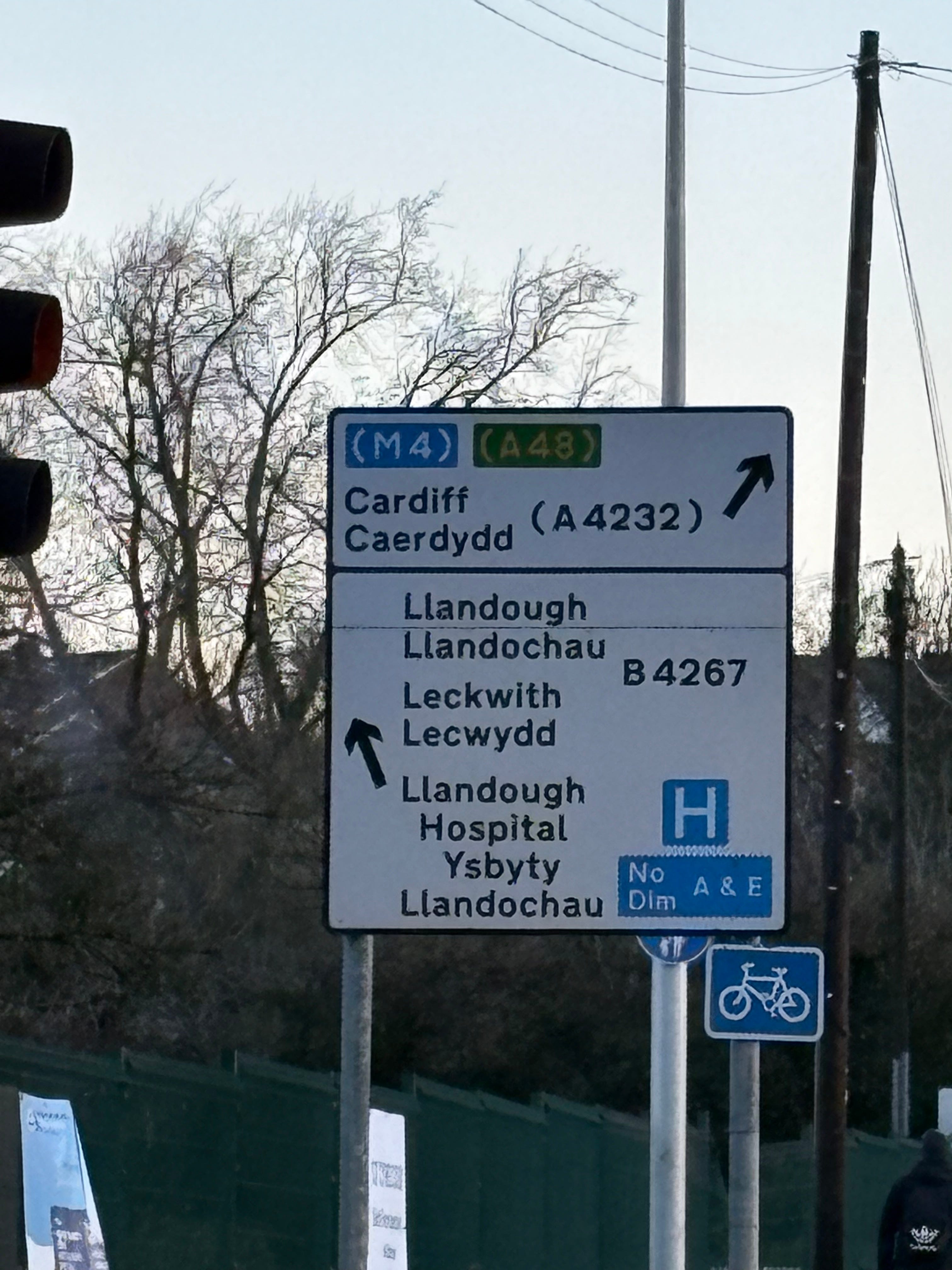
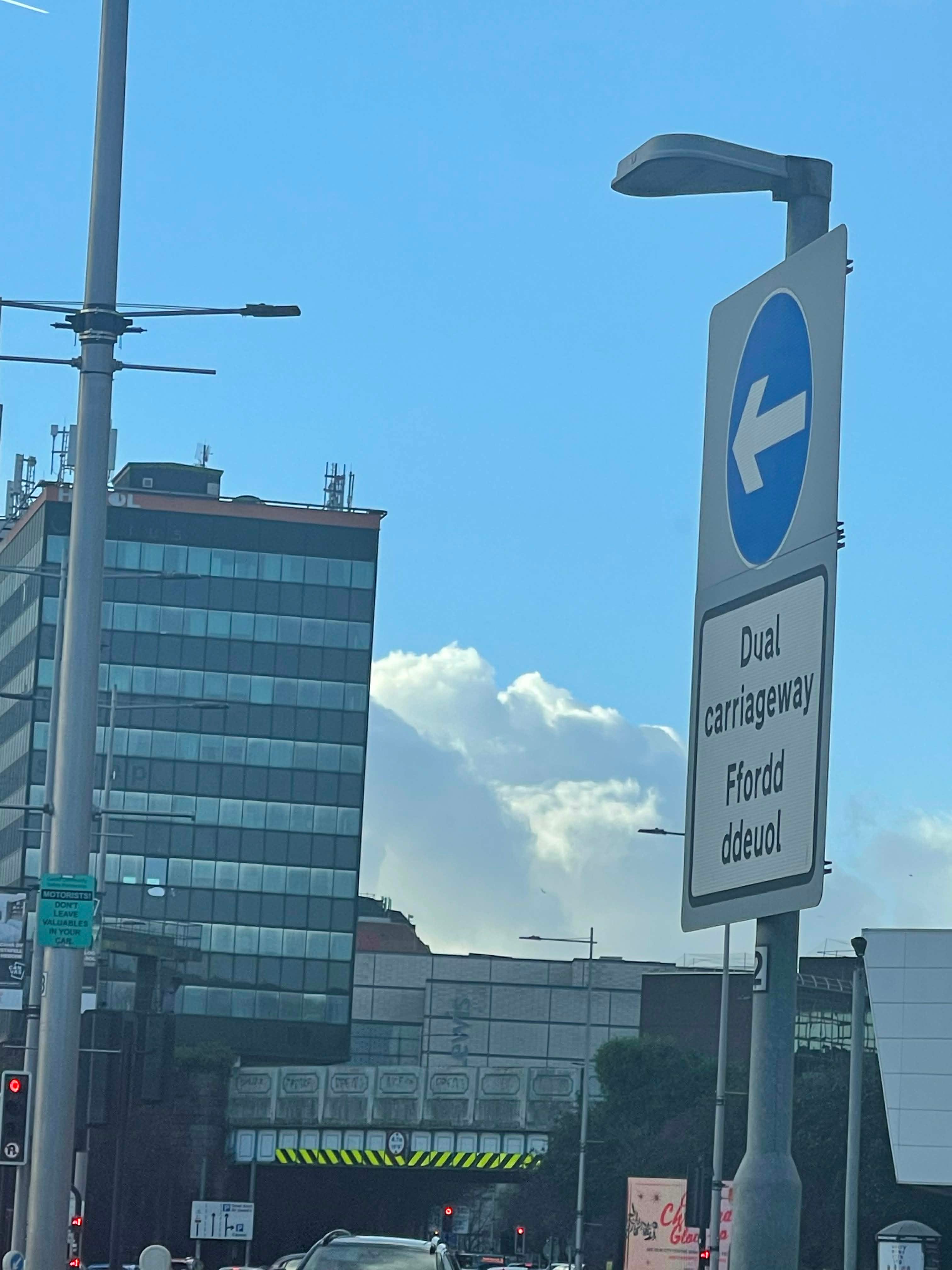
A Quick Detour: Switzerland, Where Trilingualism Is Just Tuesday
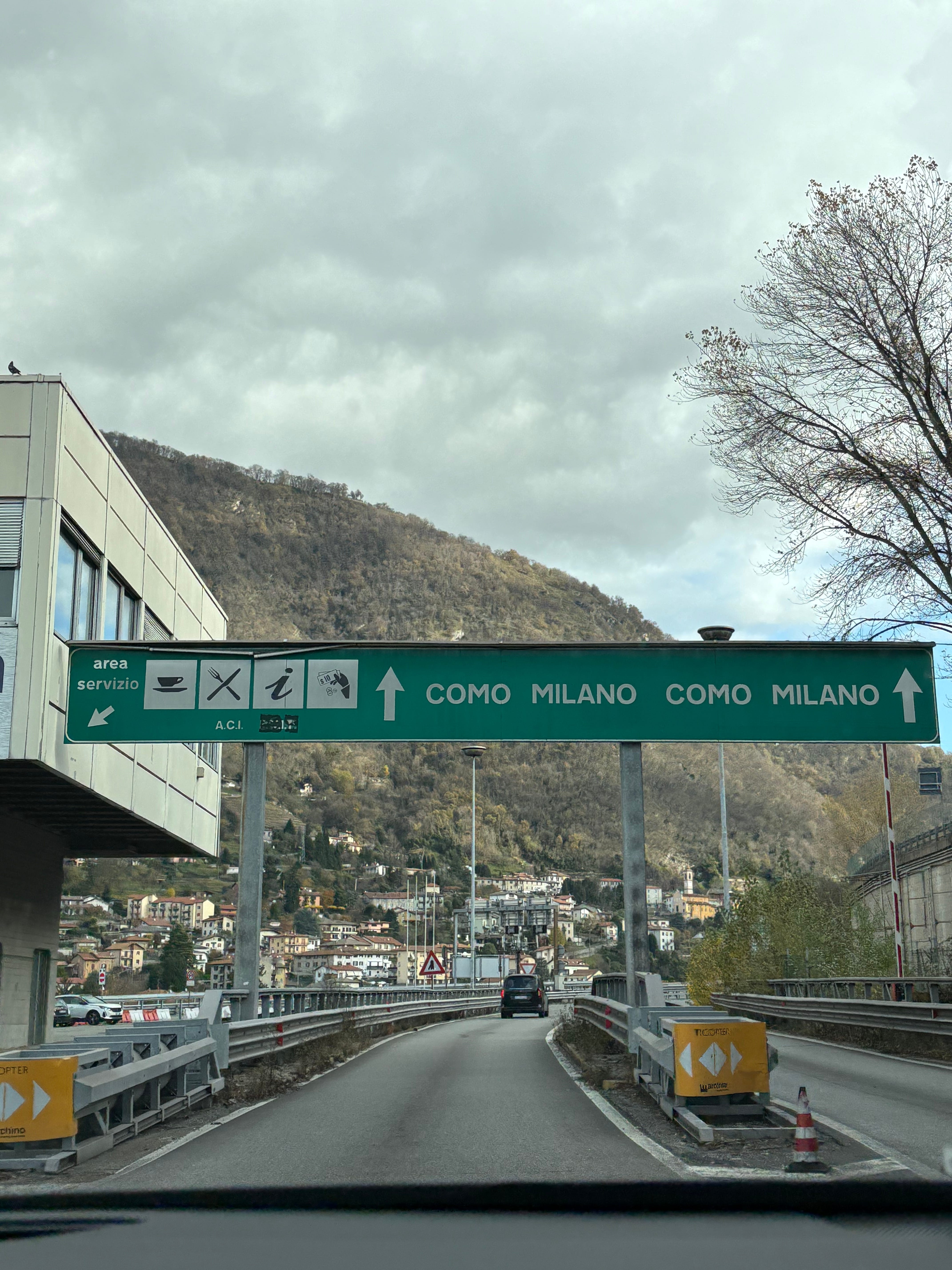
Before arriving in Wales, we spent a week in Switzerland — land of mountains, lots of chocolate, precision timekeeping, and apparently… three simultaneous languages on every sign.
Driving in and out of Zürich was a masterclass in multilingual navigation:
German… then Italian… then English… all within the same motorway system.
And all while driving on what, to my New Zealand instincts, is the wrong side of the road.
Did I survive?
Yes.
Did I get confused?
No.
Did I admire the trilingual signage and think, “Gosh, this is so helpful”?
Absolutely.
In Switzerland, every language is greeted with warmth:
A cheerful “Grüezi!” here, a friendly “Ciao!” there, an easy switch to English if needed.
Not once did anyone warn us that the presence of multiple languages could cause tourists to spiral into paralysing disorientation.
Not once did a politician campaign to protect citizens from signage containing too many vowels.
Europeans simply assume you are capable of operating your brain while reading more than one language.
A revolutionary concept, apparently.
Te Reo Māori in Welsh Classrooms
When presenting workshops in Wales, I begin as I always do—with a full mihimihi in te reo Māori. Fluent. Proud. Grounded.
And here?
People love it.
I am met with:
Reverence. Admiration. Curiosity. Joy.
Welsh educators often share their own language journeys—remembering the struggle to revive Cymraeg, and the cultural pride in seeing it now restored to public life.
One teacher from a Welsh immersion school and I exchanged untranslatable terms from both Māori and Welsh — those words that don’t exist in English because they hold a feeling, an essence, a worldview.
This is the opposite of confusion.
This is cultural enrichment.
Meanwhile, in a Pub in Y Barri/Barry… Meet Tommy
Then there was Tommy — our new mate from the Baruc Arms, in Y Barri/Barry in the Vale of Glamorgan.
Picture it:
Wales has just lost to the All Blacks.
The pub is awash with emotion and pints.
Tommy has clearly enjoyed several of those pints.
He notices we’re the only two in the pub not cheering for Wales, and once it becomes clear the All Blacks have it in the bag, he wanders over — steadying himself on nearby furniture like a man wrestling both disappointment and gravity.
“You’re not from Wales, are you?” he booms, with the volume and absence of personal space that only a few beers can produce.
Within minutes he’s admiring my daughter’s Polynesian tattoo, asking what each pattern means — not mockingly, but with genuine (if slightly wobbly) curiosity.
He listens.
He asks thoughtful questions.
He wants to know more about our culture.
Even in his post-match, post-lager state, Tommy makes space for Māori language and story.
If a tipsy Welshman can manage cross-cultural curiosity at closing time, I assure you New Zealand can manage bilingual road signs.
Visitors Aren’t Confused by Bilingualism — They’re Enriched by It
This is the part bilingualism critics never seem to grasp:
Visitors don’t experience bilingual signs as confusing.
They experience them as interesting.
Inviting.
Welcoming.
A doorway into understanding where they’ve landed.
Everywhere we travel, people ask about Māori words, haka, tikanga, ta moko.
They love it.
They celebrate it.
They want to know more.
The only people afraid of bilingualism seem to be the ones trying to legislate against it at home.
What My Travels Have Taught Me
Multilingualism is normal.
In Wales. In Switzerland. Everywhere.Language is pride made visible.
Not a political threat, but an identity.Visitors adapt with ease.
Trilingual motorway signs? No problem.
Aotearoa’s bilingual ones? Apparently apocalyptic.Language opens connection, not confusion.
From staffrooms to Swiss cafés to Y Barri/Barry pubs.The world values Māori culture more than some of our own politicians do.
People light up when they hear te reo Māori. Everywhere.
Final Thought: If I Can Drive Through Switzerland and Wales…
…juggling German, Italian, Welsh, English, and Māori pronunciations while driving on unfamiliar roads…
…surely visitors to Aotearoa can cope with Tāmaki Makaurau / Auckland on a road sign.
Trust me.
They’ll love it.
Just like I loved every “Croeso,” “Araf,” “Diwedd,” “Grüezi,” and “Ciao” that guided me along the way.
Curious about the work I do in education around the world?
I’m currently working alongside educators and systems in Australia, Canada, Finland, the UK, Nigeria, India and Singapore, sharing learning, supporting innovation, and advocating for what truly matters in education: people, purpose, and professional trust. If you’re interested in where I’m travelling, who I’m working with, or how this work might support your own context, here’s where you can learn more:
🎤 Professional Speaker Profile – Keynotes, consultancy and facilitation
🧠 P-BLOT™– Evidence-informed support for behaviour and learning
🔗 Connect on LinkedIn – Reflections, resources and current projects


Love your article on bilingualism. However, it should be noted that David Seymour is clearly monolingualistic and would be greatly confused, if not traumatised, by visiting any of the places that you have mentioned.
Fascinating, I totally get what you mean about the 'confusion' argument, it's like people forget our internal language models are designed for parallel proccesing, not single-thread rigidity.